Podcast: Who owns maintenance decisions in a reliability-focused plant?
In this episode of Great Question: A Manufacturing Podcast, Joe Kuhn discusses maintenance ownership, operator responsibilities and the risks of blurred accountability.
INDUSTRY INTELLIGENCE
Aggregated headlines and summaries are provided for discovery. Full content remains with the original publisher.
Last feed update: Nov 3, 2026 16:18 · 108 stories cached
77 matching articles
In this episode of Great Question: A Manufacturing Podcast, Joe Kuhn discusses maintenance ownership, operator responsibilities and the risks of blurred accountability.

Having explored reliability and risk management in Reliability Bites #21-30, this next phase moves into probability and statistics for reliability, aligning with Part III of the ASQ Certified Reliability Engineer Body of Knowledge. That may sound like the point where reliability engineering becomes mostly mathematics. But statistics is not mathematics for the sake of it […] The post Probability and Statistics for Rel
This month’s top 5 stories explore CMMS deployments, maintenance shortcuts, pump selection, water reuse and electrical safety in industrial plants.
Maintenance decisions rarely fit into simple absolutes, and Joe Kuhn explains where conventional wisdom can create problems for plant reliability and performance.
Success depends upon previous preparation, and without such preparation there is sure to be failure. Confucius For FMEAs to be successful, it is essential that certain preparation steps are properly completed before the FMEA meetings. AI can help with FMEA preparation. However, you will need to understand the capabilities and limitations of AI. Information on […] The post FMEA and AI – Preparation appeared first on A
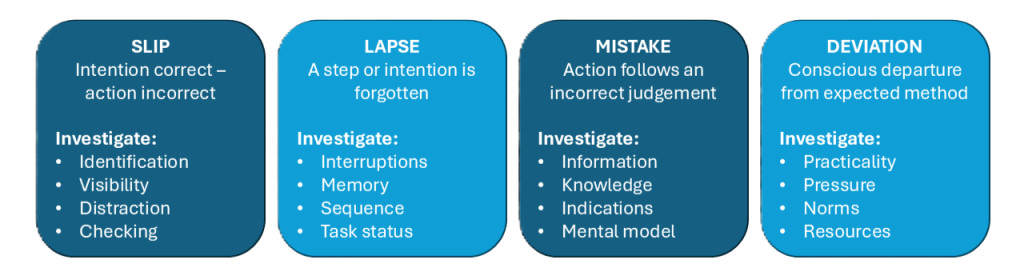
From ‘Human Error’ to System Understanding In Part 4 of Beyond the Numbers, I explored how Human Factors can strengthen Maintenance Task Analysis (MTA) by examining whether maintainers can perform maintenance tasks safely, correctly and consistently under the conditions they will actually encounter. Rather than assuming perfect performance, the aim was to design maintenance that […] The post Human Factors in Root Cau
Throughout this series, we have explored how failures occur, how risks can be identified and assessed, and how seemingly independent events can combine in unexpected ways. But reliability engineering is not only concerned with whether something fails. It is also concerned with what happens when it does. Understanding hazards A hazard is a condition that […] The post Hazard analysis and system safety – linking reliabi
Budgets will rise and fall, but a disciplined process, honest conversations, and a commitment to reliability ensure that the right work gets done. When leaders stand together on those principles, the plant becomes safer, more stable, and better prepared for the future. The post Managing Budget Cuts in Maintenance and Reliability appeared first on Maintenance World.
Reliability and Its Impact on Employee Engagement Employee engagement is a critical factor for any organization’s success. Engaged employees are more productive, motivated, and loyal, contributing significantly to the overall performance of the business. While many factors influence employee engagement, one key driver often overlooked is reliability—the consistent and dependable performance of equipment, systems, and
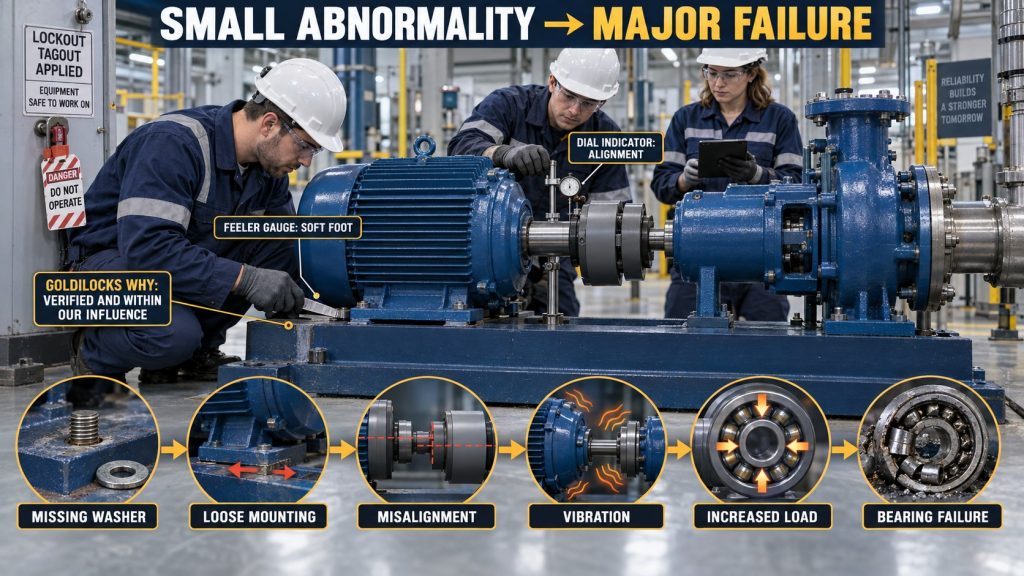
Serious equipment failures usually start as small issues that are hard to notice but worsen over time. For example, a loose bolt or missing washer might not seem important at first, but it can eventually cause a bearing to fail. To avoid this, add a quick visual check for loose bolts and missing washers to […] The post Understanding The Failure Chain appeared first on Accendo Reliability.
1. The problem with one favorite tool Ask a reliability engineer to fit life data and most of the time they’ll reach for the Weibull. That’s reasonable. With one shape parameter (β) it can act like the exponential (β = 1), the Rayleigh (β = 2), or something close to a normal (β ≈ 3.5). […] The post The Lognormal Distribution: The Weibull’s Biggest Rival appeared first on Accendo Reliability.
I have seen FMEA registers that run to forty pages. Neatly formatted. Colour-coded. Saved in a shared drive nobody opens. The plant that produced them was still running on breakdown maintenance. Technicians were still firefighting the same failures every quarter. Managers were still asking, “Why does this keep happening?” The FMEA existed. It just did […] The post FMEA Is Not a Document. It Is a Decision. appeared fi
Redundancy is one of the most common ways of improving reliability. If one component fails, another can take over. Simple. Or is it? The effectiveness of redundancy depends on an important assumption: that the redundant elements fail independently. When that assumption is wrong, Common Cause Failure (CCF) can undermine the protection redundancy was intended to […] The post Common Cause Failure – why redundancy isn’t
Sustainability is a fundamental responsibility for businesses aiming to reduce their environmental footprint, improve efficiency, and build long-term resilience. Reliability plays a crucial role in achieving sustainability goals by ensuring that assets, processes, and operations function efficiently, reducing waste, energy consumption, and environmental harm. Organizations that prioritize reliability through proactiv
There is a statistic making the rounds in reliability engineering circles that should stop every African plant manager cold. According to field data compiled across multiple industries on the continent — cement, mining, port operations — more than 70% of rotating equipment failures are not caused by the equipment itself. The bearings are not defective. […] The post Africa’s Rotating Equipment Failures: The Case Again